
Monday, Oct 26, 2026

Keynote 1
Bertrand Braunschweig (SystemX)Bertrand Braunschweig began his career in the oil industry as a researcher in systems dynamics and artificial intelligence. He then joined IFP Énergies Nouvelles to manage AI research and coordinate international interoperability standards projects. He spent five years at the ANR as head of the ICST department, before joining Inria in 2011 as director of the Rennes research centre, then of the Saclay research centre, and then to steer the research component of the national AI strategy. He is now an independent consultant and provides support to various organisations, notably as scientific coordinator of the Confiance.ai programme operated by IRT SystemX and of its follow-up, the European Trustworthy AI Association. He is interim scientific director of SystemX. Bertrand Braunschweig is an ENSIIE engineer, PhD from Paris Dauphine University and Habilitation from Pierre and Marie Curie University.
Norms and Standards for Trustworthy AI
I will present the status of harmonised norms and standards in support of the AI Act, and some general considerations about trustworthy AI.
Course 1
Kévin Mantissa (System X)Kévin Mantissa is a Research Engineer at IRT SystemX, ad is involved in the European Trustworthy AI Association. He graduated from INSA Centre Val de Loire with an Industrial Risk Management degree. He started working for a consulting company as an Automotive Functional Safety Engineer from 2017 to 2020. In 2020, he joined IRT SystemX initially to pursue Safety activities on driving automation system projects. Since then, he has been involved in AI-related projects such as the French Confiance.ai program from 2021 to 2024 regarding methodology topics, and also got to work on Digital Twins-related projects. He also provides courses for the Specialised Master on Trustworthy AI for the French Engineering School CentraleSupélec.
Confiance.ai Body of Knowledge, a key asset to build upon for Trustworthy AI
Confiance.ai was a French program, from 2021 to 2024, funded by France 2030, which gathered several industrial and academic actors around the topic of trustworthy artificial intelligence. This program produced numerous assets during its runtime: scientific papers, white papers, methods and tools. It also gave birth to several initiatives, the European Trustworthy AI Association being one of them. Today, ETAIA aims to federate a European community on Trustworthy AI, while managing the assets resulting from Confiance.ai. One of these key assets is the end-to-end methodology, or Body of Knowledge (BoK), which presents key activities we should consider in a W-cycle to develop an AI-based system that complies with trustworthiness requirements. This course will give you an overview of this methodology.
Tuesday, Oct 27, 2026

Course 2
Eva Giboulot (Inria)Eva Giboulot is an Inria researcher in Rennes, as a member of the Artishau Team.. She received the Ph.D. Degree in Engineering science from the University of Technology of Troyes, France with research activities in information security and signal processing, focusing on steganography and steganalysis. She served as a Post-Doc Researcher at the Artificial Intelligence Center of the Czech Technical University, Prague, Czechia. Her current interests are in the area of AI security, particularly in the design of secure watermarking methods as well as theoretically grounded forensics methods for the detection of generated content. She is a member of the IEEE Information Forensics and Security Technical Committee since 2025.
Watermarking of LLM-generated texts from first principles
Watermarking is the secure communication of a mark over an unreliable channel. This tutorial aims to present a general methodology for designing inference-based text watermarking. In particular, the goal is to teach how to construct watermarking schemes which possess explicit theoretical guarantees in terms of probability of false alarm and, when possible, in terms of detectability. We start with the design of a powerful, yet naïve, approach: the KGW algorithm. From this baseline we touch upon the most common design mistakes of watermarking in the literature: the use of z-scores, insecure designs and poorly defined quality metrics. To address these issues, we construct a general watermarking framework based on statistical hypothesis testing and information theory. We illustrate the framework with a plug-and-play zero-bit scheme, WaterMax, as well as a tentative multi-bit one. We conclude with the limitations of inference-based schemes, notably the difficulty of using them in an open-source setting, as well as potential remedies: weight-based schemes and finetuning.

Keynote 2
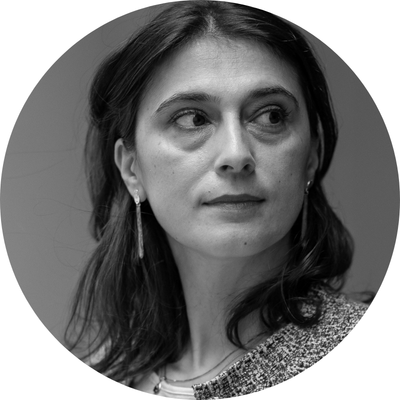
Stefan Feuerriegel (LMU Munich School of Management)Stefan Feuerriegel heads the new Institute of Artificial Intelligence (AI) in Management. He holds a dual affiliation as a full professor at LMU Munich School of Management and the Faculty of Mathematics, Informatics, and Statistics at LMU Munich. In 2024, he visited the Stanford University in the USA as a Visiting Scholar. In 2025, he was a visiting scholar at the Cambridge Centre for AI in Medicine (CCAIM) at the University of Cambridge. Previously, Stefan was an assistant professor at ETH Zurich. He graduated in 2015 with a Ph.D. at the Chair for Information Systems Research (Prof. Dr. Dirk Neumann), University of Freiburg. During his research stays, he partnered with researchers from the University of New South Wales (UNSW), Sydney, the National Institute of Informatics (NII), Tokyo, McCombs School of Business at the University of Texas at Austin, and Carnegie Mellon University (CMU), Pittsburgh. He has also been invited as a lecturer to teach in the Research Sprint at Berkman Klein Center for Internet and Society, Harvard University.
Causal Machine Learning for Reliable Decision-Making
Decision-making inherently involves cause-effect relationships, which introduce causal challenges. We argue that reliable algorithms for decision-making need to build upon causal reasoning. Addressing these causal challenges requires explicit assumptions about the underlying causal structure to ensure identifiability and estimatability, which means that the computational methods must successfully align with decision-making objectives in real-world tasks. Here, we introduce Causal ML as a principled framework for predict outcomes under intervention and thus enable what-if analysis in decision-making.
Course 3
Marija Slavkovik (University of Bergen)Marija Slavkovik is a Professor with the Faculty for Social Sciences of the University of Bergen. Her background is in computer science and artificial intelligence. She has been doing research in machine ethics since 2012. Machine ethics studies how moral reasoning can or should be automated. Marija works on formalising ethical collective decision-making. She has held held several seminars, tutorials and graduate courses on AI ethics (http://slavkovik.com/teaching.html). Marija is a vice-chair of the t f European Association for Artificial Intelligence, and Society track editor of JAIR. Her publications can also be found here (https://scholar.google.com/citations?user=TVmqPq0AAAAJ&hl=en&oi=ao)
Automating Moral Reasoning
Wednesday, Oct 28, 2026

Keynote 3
Marie-Jeanne Lesot (Sorbonne University)Marie-Jeanne Lesot is a professor at LIP6, the department of Computer Science Lab of Sorbone Université and a member of the Learning and Fuzzy Intelligent systems (LFI) group. Her research interests focus on eXplainable Artificial Intelligence (XAI) and include similarity measures, fuzzy clustering, linguistic summaries and explanation generation, e.g. through the development of interpretable models, counterfactual examples or self explanations.
eXplainable AI: some methods and risks
The domain of eXplainable AI aims at enriching predictions made by machine learning methods, associatig them with explanations or rationale for the decisions they take. The talk will discuss some families of approaches developed for generating such explanations, underlining their diversity, in a domain where the very definition of explanation remains debated. It then several addresses risks that such explanations can entail, by highlighting certain questions calling for caution, essential in a context where explanations are sometimes used to increase confidence in models built or trained automatically.

Course 4
Rafael Pinot (Sorbonne University)I am a junior professor in the department of mathematics at Sorbonne University. My main line of research is in statistical machine learning with a focus on the privacy and robustness of machine learning algorithms. Most of my work has a theoretical flavor, but I also like to work on more applied projects to get deeper understanding of state-of-the-art methods, or simply to better grasp the gap that can exist between the theoretical analysis and the empirical performance of some machine learning algorithms.
Byzantine Machine Learning: a Primer
The vast amount of data collected every day, combined with the increasing complexity of machine learning models, has led to the emergence of distributed learning schemes. In the now classical Federated learning architecture, the learning procedure consists of multiple data owners (or clients) collaborating to build a global model with the help of a central entity (the server), typically using a distributed variant of SGD. Nevertheless, this algorithm is vulnerable to « misbehaving » clients that could (either intentionally or inadvertently) sabotage the learning by sending arbitrarily bad gradients to the server. These clients are commonly referred to as Byzantine and can model very versatile behaviors going from crashing machines in a datacenter to colluding bots attempting to biais the outcome of a poll on the internet. The purpose of this talk is to present a small introduction the emerging topic of Byzantine-Robustness. Essentially, the goal is to enhance distributed optimization algorithms, such as distributed SGD, in a way that guarantees convergence despite the presence of some Byzantine clients. We will take the time to present the setting and review some recent results as well as open problems in the community.
Startup program
Thursday, Oct 29, 2026

Keynote 4
Maximilian Kiener (Hamburg University of Technology)Maximilian Kiener is Head of the Institute for Ethics in Technology at Hamburg University of Technology (tuhh.de/ethics) and Associate Research Fellow at the Oxford Uehiro Institute for Practical Ethics. He holds a BPhil and DPhil in Philosophy from the University of Oxford, where he also served as an Extraordinary Junior Research Fellow and Leverhulme Early Career Fellow. His research explores the ethics of artificial intelligence, with a particular emphasis on ethics by design and moral responsibility.
Deep Ethics
This talk presents deep ethics as an emerging field concerned with translating qualitative ethical reasoning into computational forms, including metrics, models, and decision procedures. Deep ethics promises to embed ethical reasoning directly into AI design. But it also risks excluding what cannot be measured, disguising assumptions as technical facts, and narrowing practical judgement. The central question is whether ethics can be made computable without losing the openness and contestability that make ethical deliberation possible.
Course 5
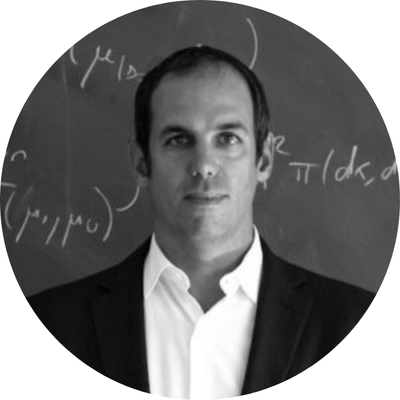
Jean-Michael LoubesHe also holds the ‘Trust in Artificial Intelligence’ Chair at the AI research centre Artificial and Natural Intelligence Toulouse Institute (ANITI), where he conducts research on the issues of AIS auditing, bias and robustness in AI.
He obtained a PhD in applied mathematics from the University of Toulouse III in 2000. He then held research posts at the CNRS, Université Paris-Sud and Université Montpellier II, before being appointed professor in Toulouse in 2007.
Alongside his academic activities, Jean-Michel Loubes has been involved in bringing together research and the socio-economic world. He was regional manager for the Occitanie region of the CNRS’s Agence de Valorisation des Mathématiques (AMIES) from 2010 to 2016. He was a member of the Conseil National des Universités in mathematics, the Conseil Scientifique of the Institut des Mathématiques of the CNRS and the jury of the Agence Nationale de la Recherche in AI.
He is also co-inventor of several patents relating to applications of machine learning to biology or to the detection of anomalies and biases. He is also Director of the National AI Assessment Program and Scientific Director at INESIA (National Institute for AI Assessment and Safety)
Analysis of bias in machine learning algorithms

Course 6
Mélanie Ducoffe (Airbus Central Research & Technology)Robust Vision-Based AI for Aeronautical Certification
This course addresses the verification and certification of vision-based landing systems in aeronautics under the ARP AI standard framework. Participants will explore robust testing via adversarial attacks, robust validation, and formal verification tailored to object detection metrics like IoU. The curriculum covers formal explainability for failure hazard analysis and provides hands-on Colab tutorials using PyTorch, auto_LiRPA solvers, and the LARD dataset to deliver actionable industrial certification assets.
Friday, Oct 30, 2026

Keynote 5
Vera Schmitt (Johannes Gutenberg-University Mainz)Vera Schmitt is Professor at Johannes Gutenberg University Mainz and founder and head of the XplaiNLP group, which is situated at JGU Mainz and TU Berlin. Her research advances explainable, robust, and trustworthy NLP that enables informed human-AI collaboration in high-risk domains. She pursues this agenda through two central use cases. The first is medical intelligent decision support systems (IDSS), where the aim is to design AI whose outputs and explanations are understandable, actionable, and privacy-preserving, so that clinicians and patients can appropriately calibrate their reliance in AI-supported decisions (in projects like VERANDA). The second is trusted information processing, where explainable and multimodal language technologies help journalists, fact-checkers, and the public verify content, trace disinformation narratives, and detect foreign information manipulation and interference (in projects like EU-project FIMI-RESIST, VeraXtract, FakeXplain). Across both use cases, her work combines methods from NLP, explainable AI, and human-computer interaction with evaluation of robustness, transparency, and real-world usability. She has raised over €6.5 million in third-party funding, is a GI Junior Fellow, and is active in the community as Area Chair, reviewer, and keynote speaker.
Between Mechanism and Meaning: Rethinking Explainable AI
Explainable AI has developed along two largely separate tracks, with different communities, methods, and goals. Mechanistic interpretability tries to reverse-engineer model internals, identifying features, circuits, and causal pathways in neural networks, but its findings are partial, costly to produce, and rarely translated into forms that non-specialists can act on. Post-hoc XAI produces accessible explanations, from feature attributions to the fluent natural-language self-explanations of large language models, but these are often only loosely tied to the underlying computation and can be misleading. This keynote argues that trustworthy explainability requires bridging the two. We first review recent advances in mechanistic interpretability, including sparse autoencoders, attribution graphs, and causal interventions on model activations, and outline the challenges that limit their practical use: scaling to frontier-sized models, validating automatically labelled features, and accounting for the computation current methods leave unexplained. We then examine how mechanistic evidence can help test and ground post-hoc explanations, for example by checking whether an LLM’s stated reasoning is consistent with its internal computation. Finally, we ask what makes an explanation useful for different decision makers, from developers and auditors to fact-checkers and clinicians, and how human-centred evaluation and the transparency and explanation provisions of the EU AI Act should shape the research agenda. The talk closes with concrete open problems.